Why Traders Keep Breaking Their Own Rules – Mastering Discipline Over Emotions

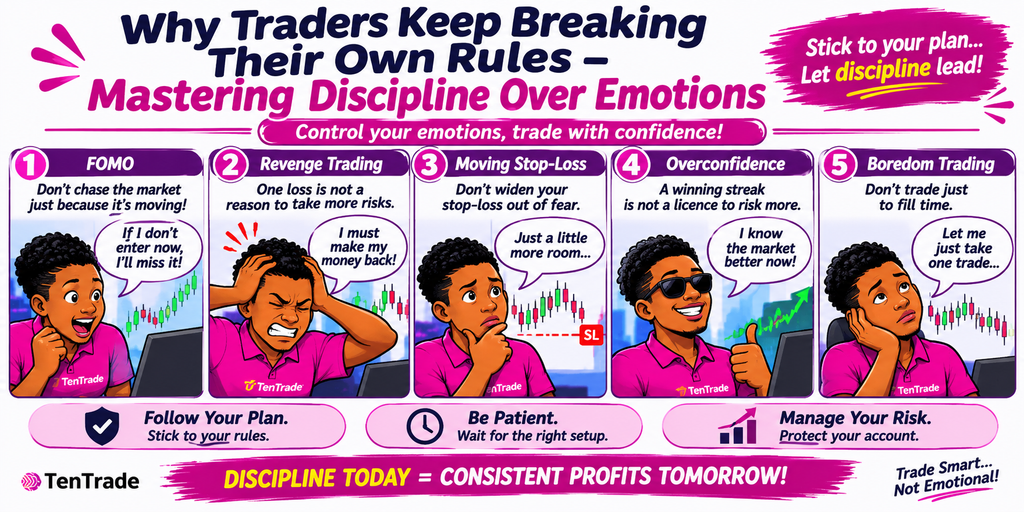
You have a trading plan. You know where to enter, where to place your stop-loss and when to take profit. Yet, somehow, you keep doing the exact opposite. Why?
Meet Kofi, a forex trader who has spent months learning technical analysis, studying candlestick patterns and developing a trading strategy. He knows his support and resistance levels, understands risk management, and has written down clear trading rules.
His plan is simple:
- Risk only 1% of his account per trade.
- Wait for confirmation before entering.
- Never move his stop-loss further away.
- Stop trading after two consecutive losses.
Everything looks perfect on paper. But when the market opens, something changes.
The morning everything goes wrong
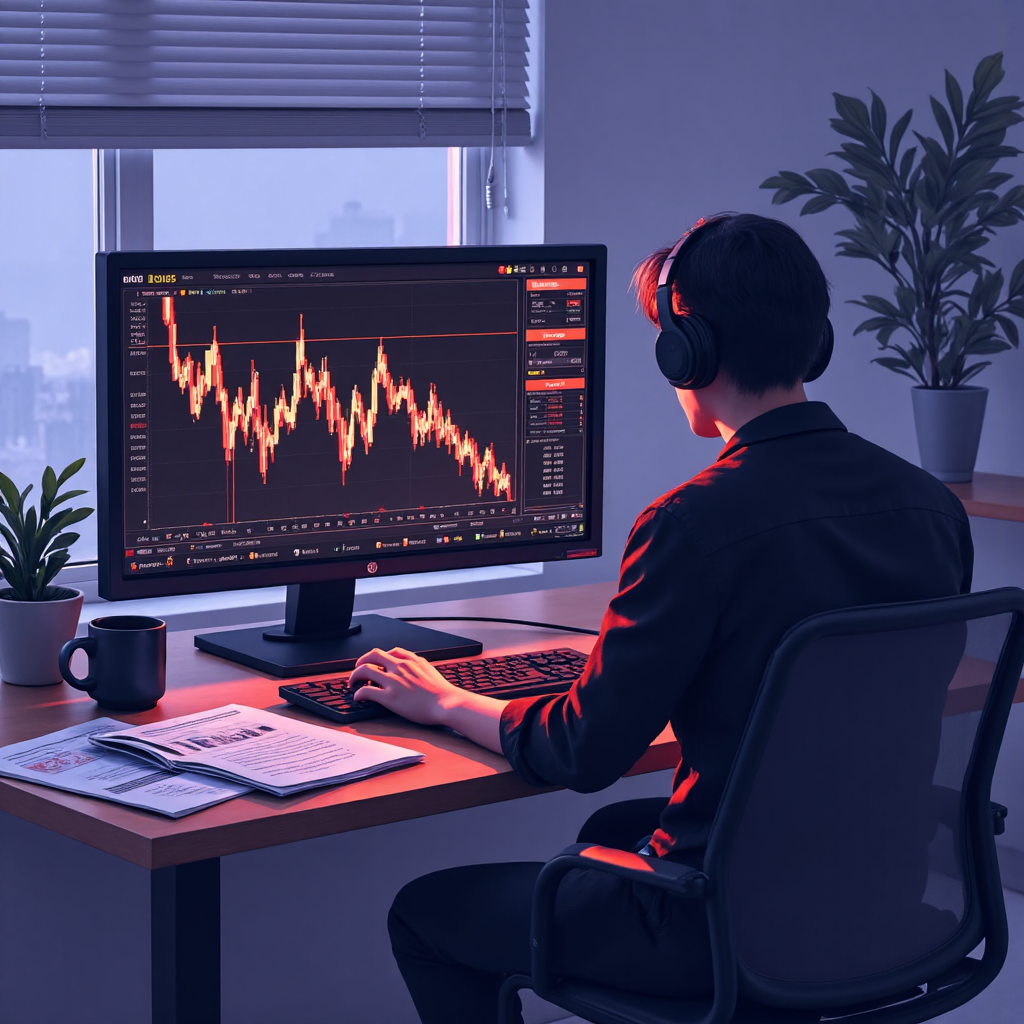
At 9:00 AM, Kofi identifies a potential buying opportunity on Gold (XAUUSD). Price approaches a support zone, but his strategy requires a bullish confirmation candle before entering.
Instead of waiting, he gets impatient.
“What if the market takes off without me?”
He enters early.
Unfortunately, the market drops, hitting his stop-loss. He loses 1% of his account.
A disciplined trader would accept the loss and wait for the next opportunity. But Kofi is frustrated.
He immediately opens another trade, this time doubling his position size to recover the money.
“I cannot finish the day in a loss. Let me just make it back.”
The second trade also fails.
Now, Kofi is angry. He moves his stop-loss further away, hoping the market will reverse. Instead, the loss grows.
By lunchtime, a simple 1% loss has turned into a devastating 6% drawdown.
What happened?
Kofi didn’t lose because he couldn’t read the market. He lost because he couldn’t control himself.
1. Fear of Missing Out (FOMO): The fear of being left behind
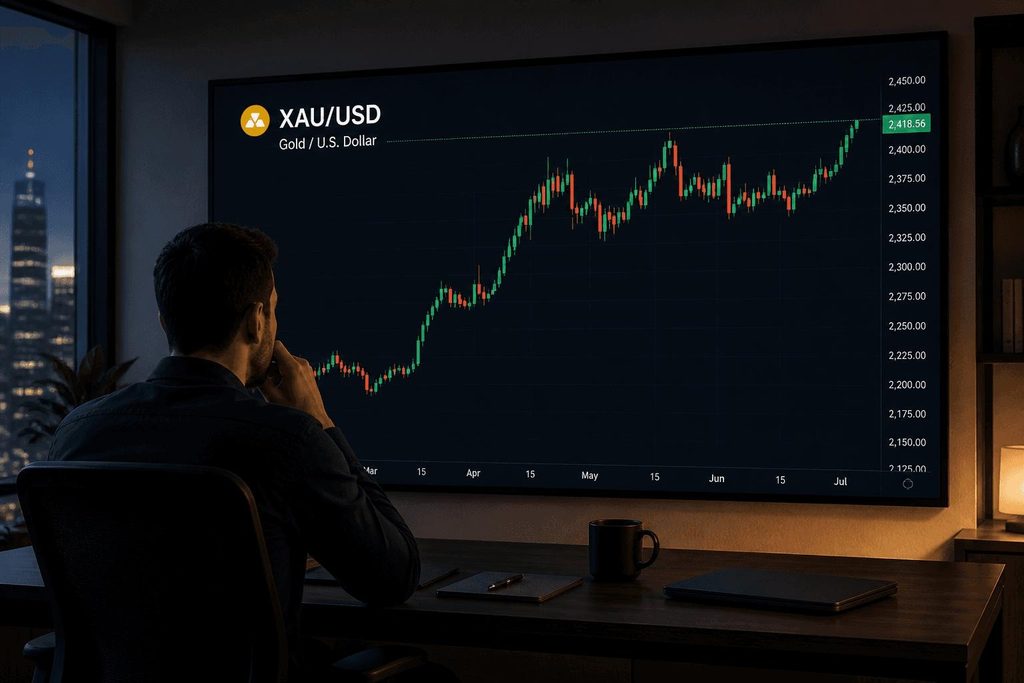
Have you ever watched Gold suddenly shoot upwards and felt an uncontrollable urge to buy?
You know the price has already moved significantly, and your strategy says to wait for a pullback. But your mind starts playing tricks on you.
“If I don’t enter now, I might miss a huge opportunity!”
You enter at the top, only for the market to reverse moments later.
This is FOMO.
The problem is that traders often confuse market movement with opportunity. Just because a market is moving doesn’t mean there is a good trade available.
The lesson:
Missing a trade is not losing money. There will always be another opportunity. Your job is to wait for the right one.
2. Revenge Trading: When one loss becomes five

Imagine starting the day with $1,000 and losing $10 on your first trade.
Instead of accepting the loss, you immediately enter another position to recover it.
You lose another $20.
Now, frustration takes over. You increase your lot size, hoping one big winning trade will recover everything.
Before you realise it, you have lost $100.
This is revenge trading.
The market doesn’t know you lost money, and it certainly doesn’t owe you a winning trade.
Trying to force the market to repay your losses is one of the fastest ways to destroy a trading account.
The lesson:
A losing trade is part of trading. Walk away when emotions take control. Protect your capital instead of chasing your losses.
3. Moving Your Stop-Loss: Refusing to accept being wrong
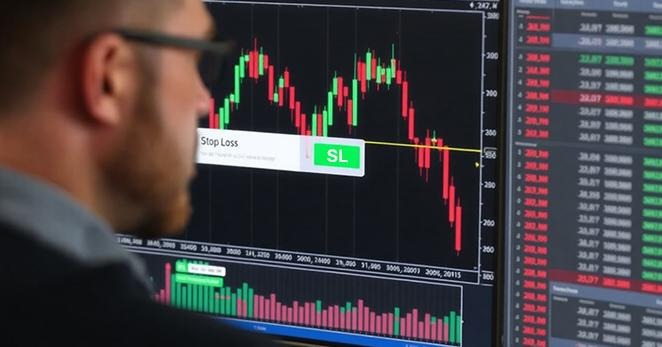
Kofi enters a Buy trade on EURUSD with a $15 stop-loss.
The market moves against him, and the price approaches his stop-loss.
Instead of accepting the planned loss, he moves the stop-loss further down.
“Just a little more room. The market will recover.”
It drops again.
He moves it once more.
What started as a controlled $15 risk becomes a $70 loss.
Why does this happen?
Because accepting a loss can feel like admitting failure. Traders sometimes prefer to remain in a losing position rather than accept that their analysis was wrong.
But professional trading isn’t about being right all the time. It’s about managing what happens when you’re wrong.
The lesson:
Your stop-loss is a risk-management tool, not an obstacle standing between you and a winning trade. Never widen it simply because you don’t want to take a loss.
4. Overconfidence: When winning becomes dangerous
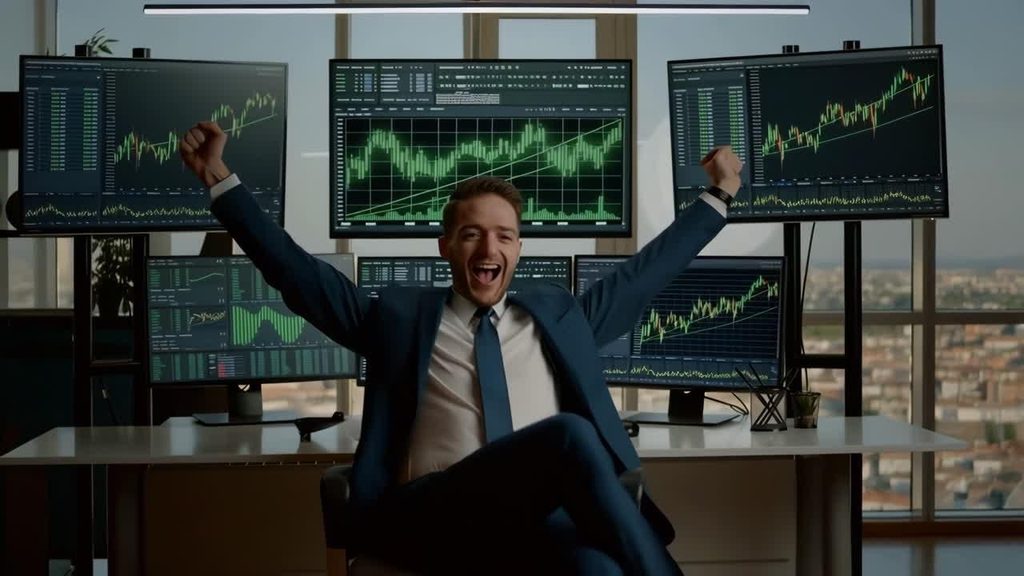
Interestingly, losing money isn’t the only thing that destroys trading discipline. Winning can be just as dangerous.
Imagine making three consecutive profitable trades.
You begin to feel unstoppable. Your confidence grows, and suddenly, your normal 1% risk becomes 5%.
You start entering trades without proper confirmation because you believe you understand the market better than everyone else.
Then comes one unexpected market reversal.
A single oversized loss wipes out the profits from your previous winning trades.
This is overconfidence.
Success can sometimes make traders abandon the very rules that helped them succeed.
The lesson:
Never allow a winning streak to convince you that you are bigger than the market. Consistency requires discipline in both winning and losing periods.
5. Boredom Trading: Not every market movement deserves your attention
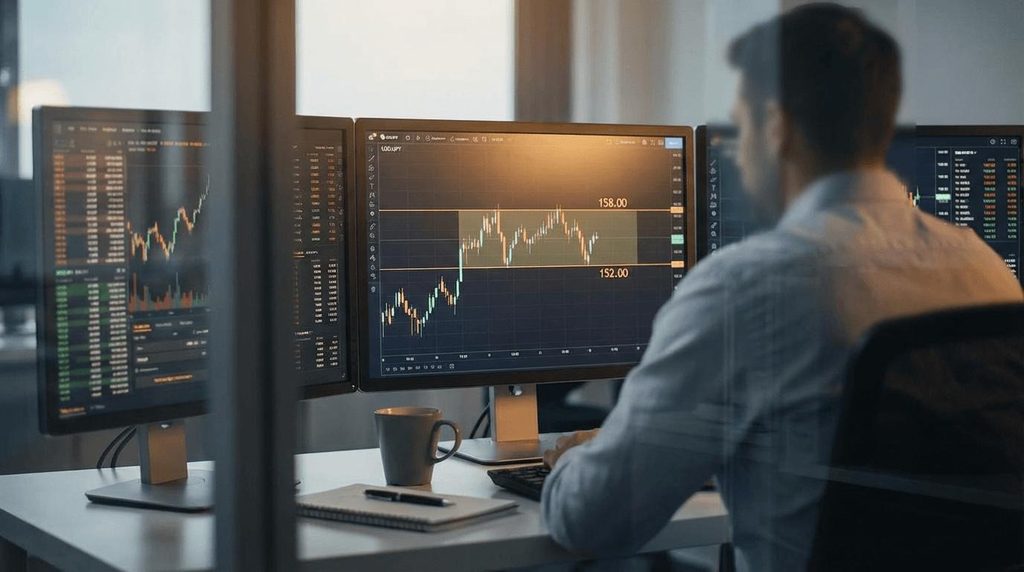
It’s 2:30 PM. Kofi has been watching charts for hours, but no valid trading setup has appeared.
He becomes bored.
He starts switching between timeframes, drawing new support and resistance levels, and looking for reasons to enter the market.
Eventually, he finds a setup that doesn’t meet all his trading conditions.
He enters anyway.
Why?
Because doing nothing feels unproductive.
But here’s a truth every trader must understand: You don’t get paid for how many hours you spend watching charts or how many trades you execute. You get results from making quality decisions and managing risk.
Sometimes, the most profitable decision is to close your charts and walk away.
6. How to Master Discipline Over Emotions
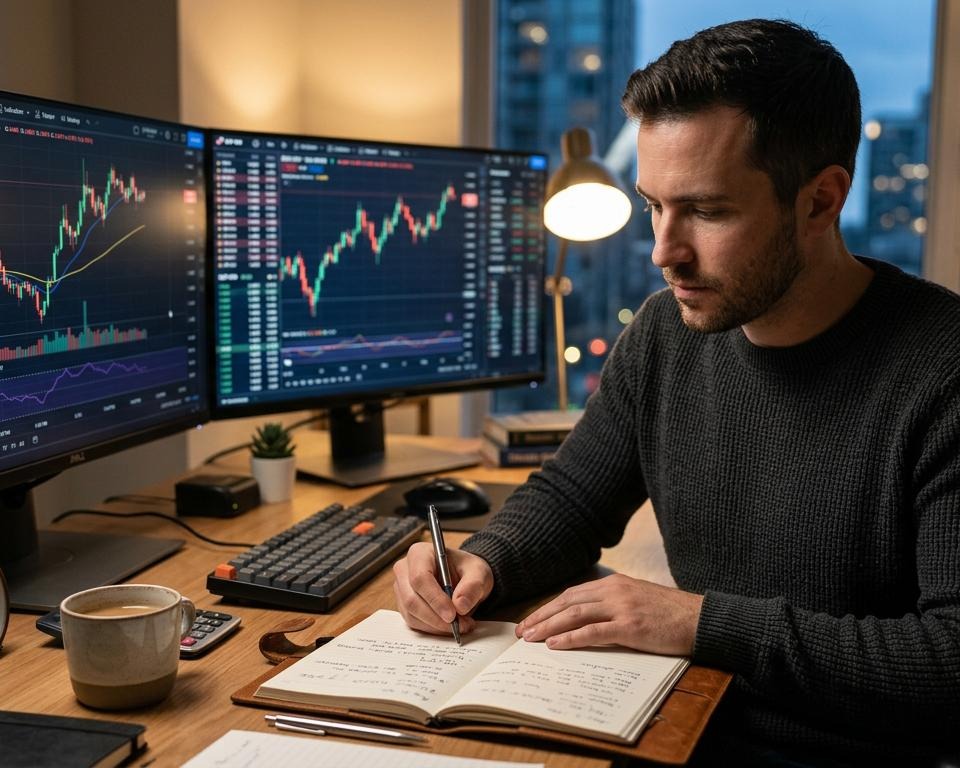
Kofi eventually realises that learning more strategies won’t solve his biggest problem. He needs to change how he responds to the market.
He introduces five simple rules:
1. Create a trading checklist.
Before entering any trade, confirm the trend, entry setup, stop-loss, take-profit and risk-to-reward ratio. If the conditions aren’t met, stay out.
2. Set a daily loss limit.
Decide how much you’re willing to lose in a day. For example, if your daily limit is 2%, stop trading once you reach it.
3. Keep a trading journal.
Record not just your profits and losses but also your emotions. Were you impatient, fearful, frustrated or overconfident?
4. Learn to walk away.
After consecutive losses or an emotionally stressful trade, take a break. You don’t have to recover your losses today.
5. Focus on execution, not just profits.
A trade that follows your strategy and ends in a loss can still be a good trading decision. A trade that breaks all your rules and makes money is not necessarily a good decision.
The Real Turning Point
Three months later, Kofi is no longer obsessed with finding more trades.
He waits patiently for confirmation. He respects his stop-loss. He risks only what he planned to risk, and he no longer feels pressured to recover losses immediately.
Some days, he makes money. Other days, he loses.
But something important has changed: his results are no longer controlled by his emotions.
He finally understands that the market cannot be controlled, but his decisions can.
And that is where trading discipline begins.
Final Thoughts: Your Rules Mean Nothing If You Don’t Follow Them
The biggest challenge in trading isn’t always identifying the next bullish or bearish opportunity. Sometimes, it’s having the courage to do nothing when your emotions are telling you to act.
Remember:
- FOMO makes you chase.
- Fear makes you exit too early.
- Greed makes you overtrade.
- Revenge makes you take unnecessary risks.
- Overconfidence makes you abandon your strategy.
The difference between a struggling trader and a disciplined trader isn’t necessarily who has the better strategy. It’s often who can consistently follow their rules, even when emotions are running high.
Your trading plan is your business strategy. Your discipline is what keeps that business alive.
The next time you feel tempted to break your rules, ask yourself:
Am I taking this trade because my strategy says so, or because my emotions are telling me to?
That one question could save your trading account.
#TradingPsychology #TradingDiscipline #ForexTrading #EmotionalTrading #RiskManagement #TradingMindset #FOMO #RevengeTrading #TradingEducation #TenTrade