Gold, Oil and the Dollar: Three Markets, One Major Shift – What’s Next for Traders?

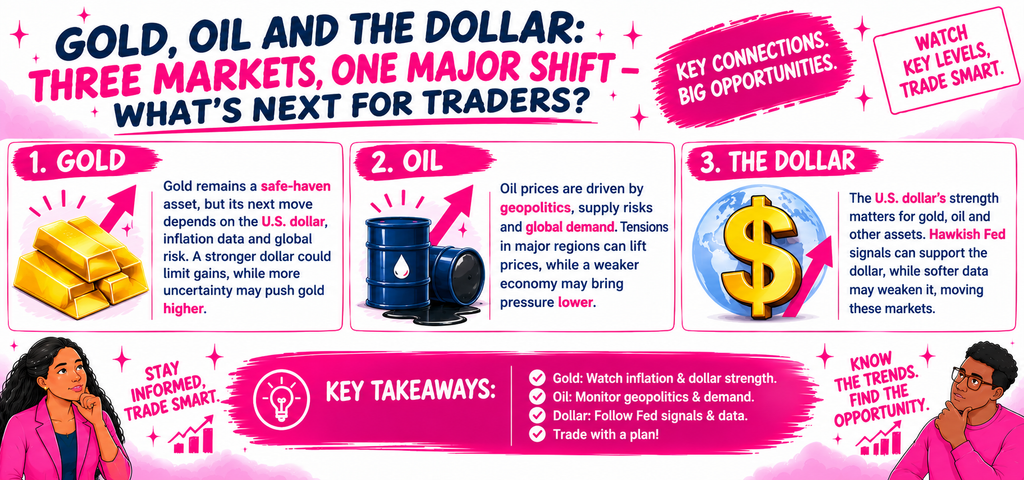
The financial markets are sending different signals, but behind every price movement is a story. Understanding that story could make the difference between chasing the market and trading with a clear plan.
Imagine waking up on a Thursday morning, checking your trading platform and noticing something unusual. Gold is moving, oil prices are falling and the US dollar is struggling to maintain its strength.
You immediately ask yourself three questions:
- Is this the right time to BUY Gold?
- Should I look for SELL opportunities in Oil?
- Is the weakening Dollar creating opportunities in Forex?
Welcome to the fascinating world of financial markets, where one major economic development can create opportunities across several trading instruments.
But before jumping into a trade, let’s understand what is happening and what it could mean for traders.
1. Gold: Is the King of Metals Ready for Another Bullish Run?
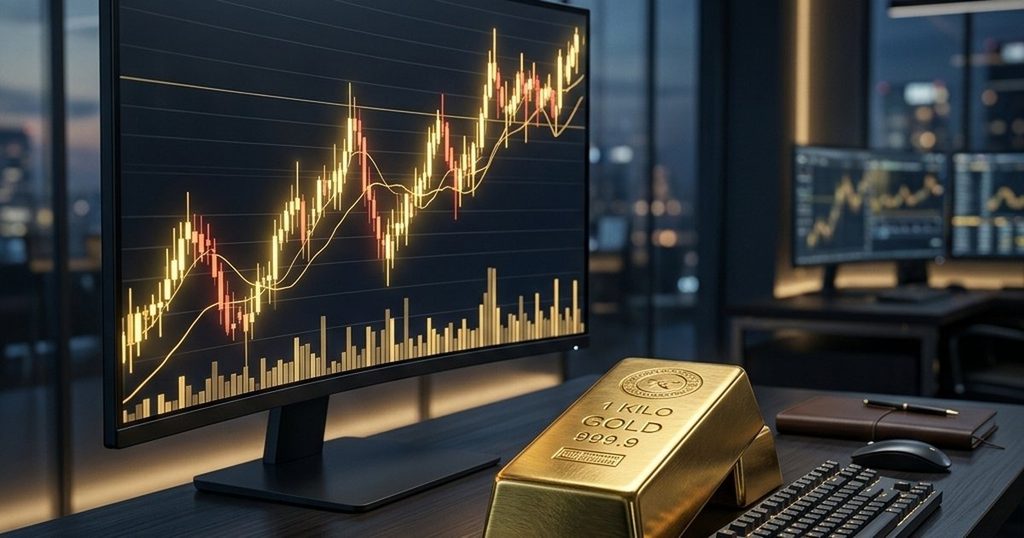
Gold has always been more than just a precious metal. It is often viewed as a safe place to preserve wealth when investors become uncertain about the future.
Recently, Gold has attracted renewed attention following a major shift in US political developments.
On Wednesday, November 4, Gold surged approximately 3%, reclaiming the $4,000 psychological level. Reports on November 5 indicated that it had climbed above $4,100, supported by a weaker US dollar and lower borrowing-cost expectations.
But what does this mean for traders?
Imagine Kofi, a trader, who has been monitoring XAUUSD for several days.
He notices that Gold has been struggling to recover after a significant decline. Suddenly, the US dollar weakens and Gold begins climbing.
Kofi becomes excited and immediately opens a BUY position.
Unfortunately, Gold makes a short pullback, triggering his stop loss before continuing upwards.
What went wrong?
Kofi understood the market direction but failed to wait for confirmation.
This is an important lesson: A bullish market does not mean every BUY entry is a good trade.
What should traders watch?
- Previous resistance levels that could become new support.
- Higher highs and higher lows on the 4H timeframe.
- Bullish candlestick confirmation around important support zones.
- US economic data and Treasury yield movements.
A sustained move above resistance could support further bullish momentum, while a rejection at resistance could create a short-term SELL opportunity.
2. Oil: Is the Energy Market Preparing for a Major Reversal?
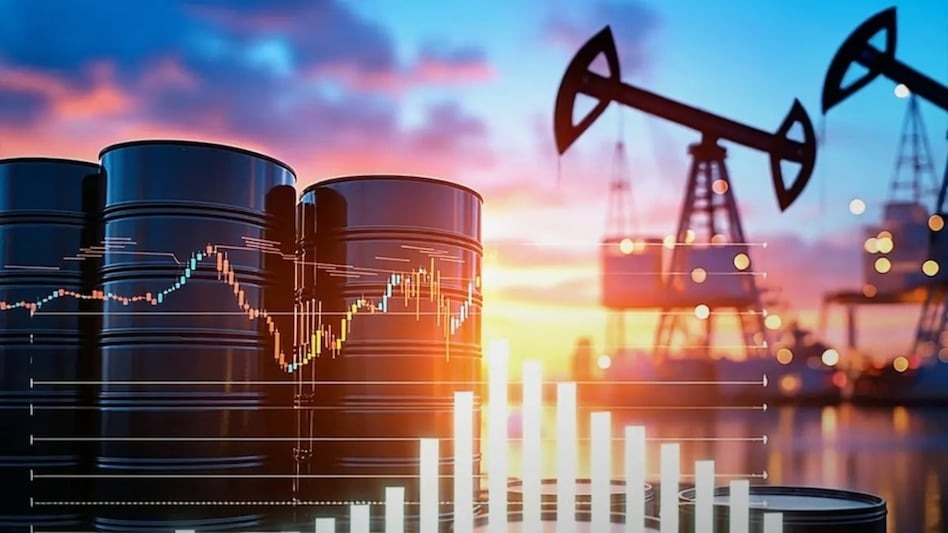
Oil is one of the most sensitive commodities in the financial markets because its price is influenced by global demand, supply, politics and economic growth.
Recently, crude oil has experienced significant selling pressure.
On November 5, reports indicated that Brent crude had fallen below $100 per barrel following expectations that political developments in the United States could reduce geopolitical tensions involving Iran. The decline followed a particularly sharp overnight sell-off.
But why should an ordinary trader care about oil prices?
Let’s bring it closer to home.
Imagine you operate a transport business. When fuel prices increase, your operating expenses rise. You may have to increase transport fares to maintain your profit.
When fuel prices decline, your expenses may reduce, giving your business some breathing space.
The same economic relationship affects airlines, manufacturers, shipping companies and other industries around the world.
For traders, changes in oil prices can create opportunities in USOIL and UKOIL.
What should traders watch?
- Geopolitical developments affecting oil-producing regions.
- US crude oil inventory reports.
- Global demand and supply conditions.
- Important support and resistance levels.
- Breakouts, retests and bearish or bullish price patterns.
If sellers maintain control below important support, oil could experience further declines. However, renewed supply disruptions or stronger demand could trigger a recovery.
Remember: falling oil prices do not automatically mean oil is a SELL.
3. The US Dollar: Why Is the World’s Most Traded Currency Losing Strength?
Now, here is where things become particularly interesting.
The US dollar plays a major role in global financial markets. It influences currency pairs, commodities, international trade and investment decisions.
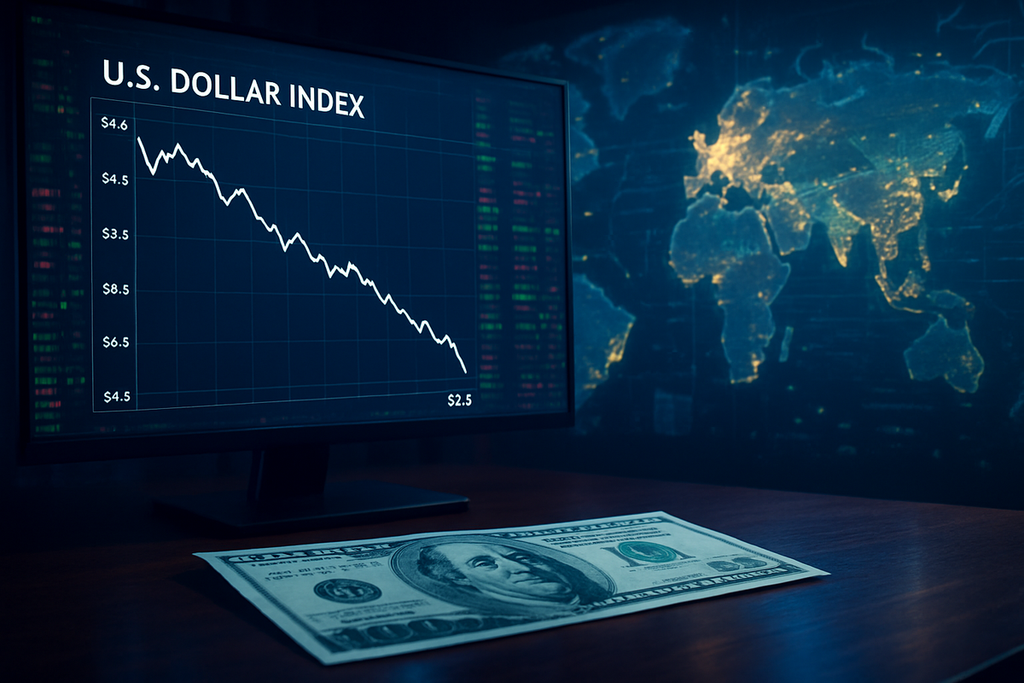
Following the US midterm election results, the dollar weakened as investors reassessed the economic and political outlook.
The dollar reached a one-month low, while Gold gained and global stock markets rallied.
But how does a weaker dollar affect traders?
Consider this simple example.
Imagine you are buying a product from an international supplier who prices everything in US dollars.
If the dollar becomes weaker against your local currency, the amount you need to pay in local currency may decrease, assuming other factors remain unchanged.
In the financial markets, a weaker dollar can also make dollar-priced Gold more affordable to international buyers, potentially increasing demand.
This is why traders closely monitor the US Dollar Index (DXY).
What should traders watch?
- DXY support and resistance levels.
- US Treasury yields.
- Federal Reserve interest-rate expectations.
- US employment and inflation figures.
- Reactions in EURUSD, GBPUSD and USDJPY.
A continued decline in DXY could create opportunities for bullish setups in some major currency pairs, but traders must consider the strength of the opposing currency as well.
4. The Connection: How Do These Three Markets Influence Each Other?
This is perhaps the most important part of today’s analysis.
Gold, Oil and the US Dollar do not operate in isolation. Their movements can be connected through inflation, interest rates, economic growth and investor sentiment.
Consider the following scenario:
A possible market reaction
US Dollar (DXY)
Bearish pressure
The dollar weakens amid changing economic expectations.
Gold (XAUUSD)
Potential bullish support
A weaker dollar and falling yields may support Gold prices.
Oil (USOIL)
Supply-demand driven
Reduced geopolitical risk and supply concerns may pressure oil prices.
Notice something important?
Gold and the dollar can sometimes move in opposite directions, while oil may respond more strongly to supply and demand developments.
However, these relationships are not fixed. A weaker dollar does not guarantee rising Gold or Oil prices.
For example, if global economic growth slows significantly, demand for oil could fall even while the dollar weakens.
This is why successful market analysis requires looking beyond one chart.
5. What Should Traders Expect Next?
With the markets reacting to major political and economic developments, traders should pay attention to upcoming economic announcements.
One important event is the US October employment report scheduled for Friday, November 6. The report could influence expectations about Federal Reserve policy and create volatility across Gold, the dollar and other financial instruments.
Here are three possible scenarios:
| Market | Bullish scenario | Bearish scenario |
| XAUUSD | Breaks resistance and holds above it | Rejects resistance and breaks support |
| USOIL | Reclaims resistance on strong demand | Breaks support amid selling pressure |
| DXY | Recovers above resistance | Continues making lower lows |
A practical trading example
Suppose Kofi wants to trade Gold.
Instead of buying simply because the dollar is falling, he follows this process:
- Checks the daily and 4H trend.
- Identifies important support and resistance zones.
- Waits for price to return to a key level.
- Looks for confirmation on the 15-minute chart.
- Calculates his stop loss and position size.
- Enters only when the potential reward justifies the risk.
This approach helps him avoid emotional entries and unnecessary losses.
6. The Biggest Lesson: Don’t Just Follow the Market, Understand It!
The biggest mistake traders make is focusing only on whether a market is going up or down.
They see Gold rising and immediately BUY. They see Oil falling and immediately SELL. They see the Dollar weakening and immediately sell every USD currency pair.
But professional trading requires more than reacting to price movements.
You need to understand why the market is moving, where price is likely to react, and what could invalidate your trading idea.
Remember these three principles:
- Fundamentals explain the story: Understand the economic and political developments driving market sentiment.
- Technical analysis identifies opportunities: Use price action, market structure, support and resistance to plan entries.
- Risk management protects your capital: Never risk money you cannot afford to lose, and avoid risking more than your trading plan allows.
Final Thoughts
Gold, Oil and the US Dollar are telling an interesting story about the changing financial landscape.
Gold is enjoying renewed buying interest, Oil is facing selling pressure and the Dollar is adjusting to changing political and economic expectations.
For traders, these movements offer opportunities to study market behaviour, identify potential setups and improve their decision-making.
But remember Kofi’s experience: knowing where the market might go is not the same as knowing when to enter.
The market will always create opportunities. Your responsibility is to wait for the right one.
So, before opening your next trade, ask yourself:
Am I trading because I understand the market, or because I am simply reacting to what I see on the chart?
#GoldTrading #ForexAnalysis #OilTrading #USDollar #XAUUSD #USOIL #DXY #TechnicalAnalysis #FundamentalAnalysis #RiskManagement #TenTrade