Sentiment Analysis in Trading: Understanding the Market’s Mood

Trading is not only about charts and economic news, it is also about understanding how traders feel. This is where sentiment analysis comes in. It helps traders identify whether the market is generally bullish (optimistic) or bearish (pessimistic).
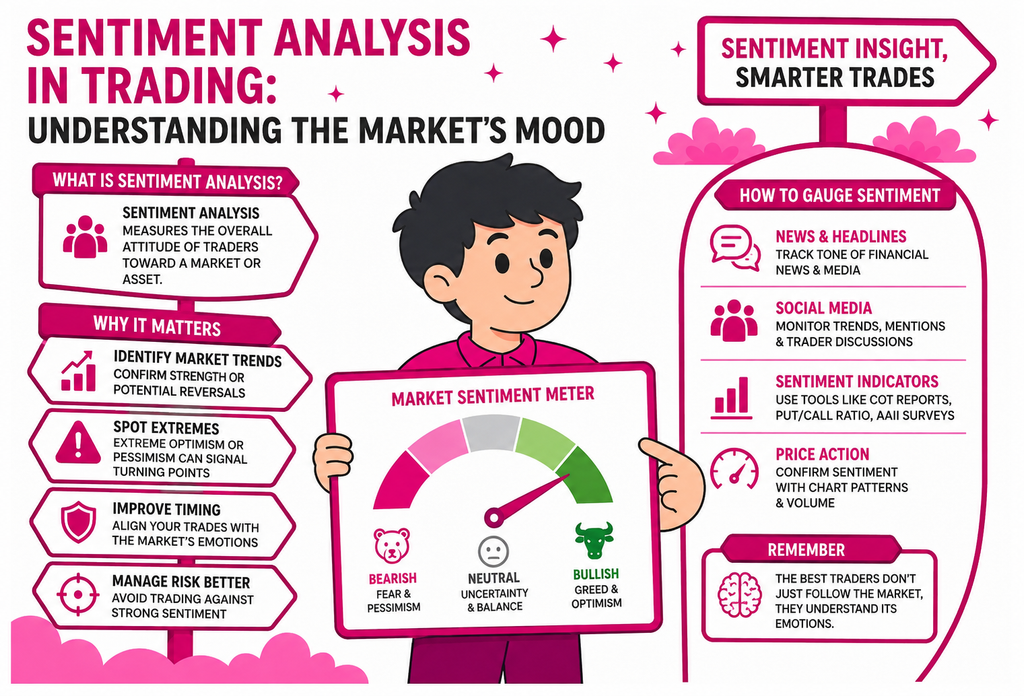
What Is Sentiment Analysis?
Sentiment analysis measures the overall mood and positioning of market participants. Traders can use news, social media, market reports and tools such as the Fear & Greed Index or positioning data to understand market sentiment.
For example, if most traders believe that gold will rise because investors expect interest rates to fall, sentiment may become strongly bullish. This can support further buying, but it can also warn you that the market may be overcrowded.
A Simple Example
Imagine you hear everyone at a football match saying, “Our team will definitely win!” You might become confident too. But if everyone has already placed their bets on that team, there may be little buying power left.
Trading can work similarly.
If 90% of traders are already bullish on EUR/USD, a positive sentiment reading does not automatically mean you should buy. The market could reverse if those traders start closing their positions.
How Traders Use Sentiment
Sentiment works best when combined with technical and fundamental analysis:
- Bullish sentiment + strong uptrend: supports a potential buy setup.
- Bearish sentiment + strong downtrend: supports a potential sell setup.
- Extreme bullish sentiment + resistance: possible warning of a reversal.
- Extreme bearish sentiment + support: possible opportunity for a rebound.
Sentiment Is Not a Signal by Itself
Sentiment tells you what traders are feeling, not necessarily what price will do next. Markets can remain extremely bullish or bearish for a long time.
Think of sentiment as the market’s mood meter. Use it alongside price action, support and resistance, economic data, and risk management before entering a trade.
Key lesson: Don’t just ask, “What is the market doing?” Ask, “What are traders feeling—and is that feeling already priced into the market?”